About the Suzuki Method
Every child can learn.
Dr. Shinichi Suzuki discovered that children could learn music through the same pathways they use to learn their native language. He called this the mother-tongue approach.
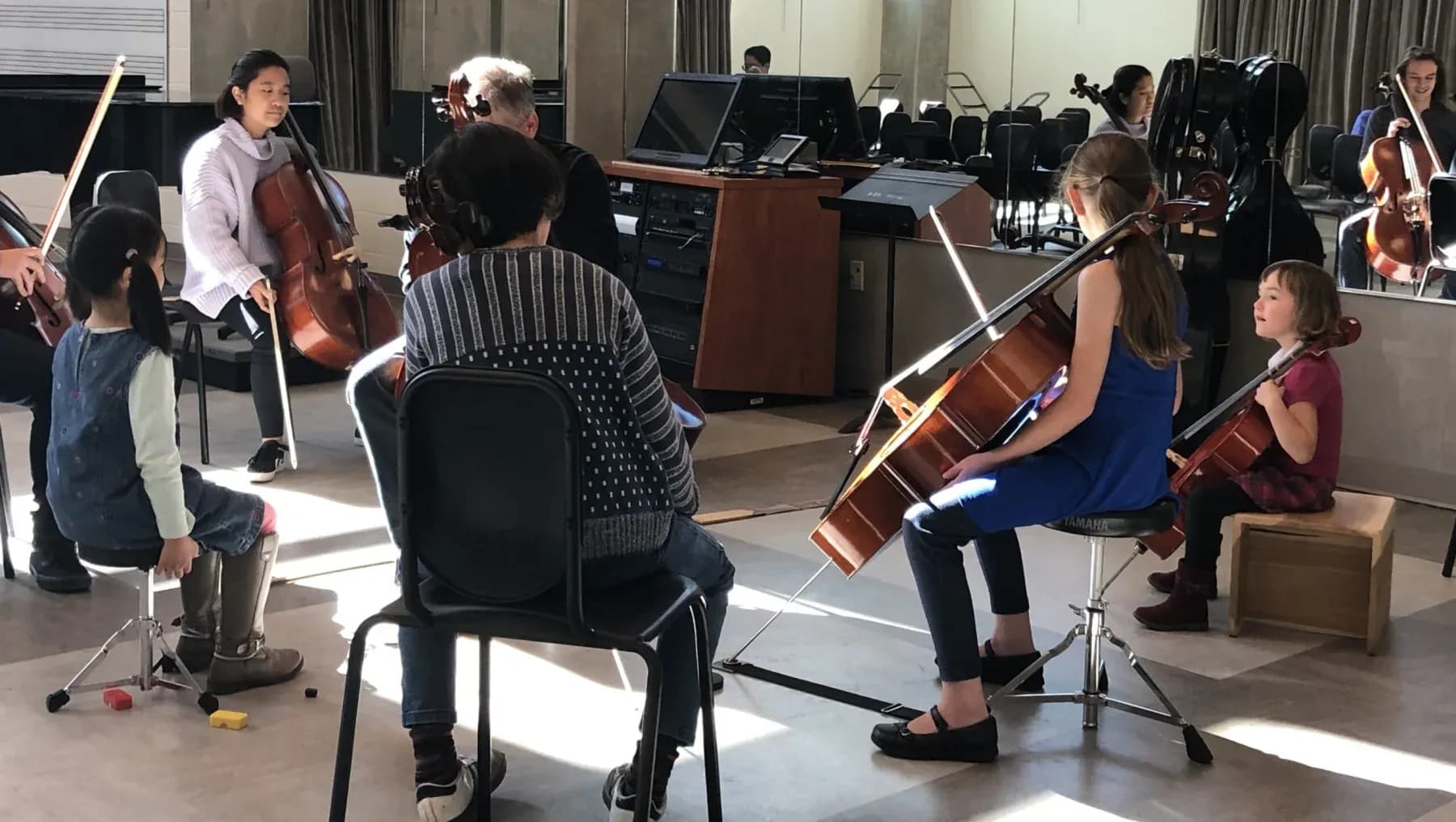
The mother-tongue approach
Children learn by listening.
Children hear words hundreds or thousands of times before they speak them. In the same way, Suzuki students listen daily to the music they are learning, becoming familiar with each piece before trying to play it.
Parent involvement
Parents are centrally involved in a young child’s musical development. They attend lessons, take careful notes, and work with the teacher to create an enjoyable and effective learning environment at home. Parent, child, and teacher form the Suzuki triangle.
Repetition and review
Children do not learn a word and then discard it. They add it to their vocabulary while continuing to use what they learned earlier. Suzuki students work the same way, reviewing familiar repertoire as they add new pieces and new technical skills.
Learning with others
In addition to private lessons, students participate in group lessons and performances. These experiences build friendships, pride, cooperation, and inspiration across different stages of learning.
Graded repertoire and encouragement
Suzuki repertoire presents musical and technical challenges in small, carefully ordered steps. Each child learns at their own rate, and effort is met with sincere praise and encouragement. The aim is not only to train musicians, but to nourish capable, generous people through music.
Parents learn alongside their children
No special musical background is required. KSA teachers show parents what to listen for, how to guide practice, and how to meet each small success with patience and encouragement.